
Planning for Life After Welcome House
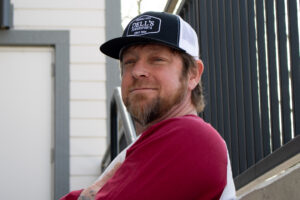 Recovery is often described as starting over, but for many people, it feels more like rebuilding. Brick by brick. Choice by choice. Day by day.
For RJ, who has been in recovery since May of 2024, preparing for life after Welcome House is not defined by a single moment of graduation. Instead, it is about learning how to live differently in the real world.
“I knew leaving was coming eventually,” RJ explains. “Welcome House is a stepping thing. It is meant to help you move forward.”
One of the most pivotal moments in RJ’s recovery came during Step 5. “Step 5 is about telling another human what you have done,” he says. “My secrets from Step 4 were the things that kept me using.”
Like many individuals living with Substance Use Disorder, RJ carried deep shame tied to past experiences, traumas, and decisions. “Those things I had done, those things I was ashamed of, they were the things that kept me getting high. Once I got those off my chest, they weren’t a weight anymore.”
More importantly, Step 5 brought an unexpected realization. “I found out I wasn’t the only person who had done those things.” In speaking honestly, RJ not only reduced his own sense of isolation but saw how vulnerability allowed others to do the same. “Admitting some of the things I’ve done broke down the shame and allowed others to talk about it as well. That changes something. That brings the reality that you really are not alone.”
Preparing for life outside Welcome House has meant focusing on stability in practical, tangible ways. Today, RJ has secured employment and worked to resolve legal issues that once stood as barriers. “Welcome House has a lot of reach when it comes to helping with legal issues,” he notes. “That kind of support makes a difference.”
RJ is also candid about the life he left behind. “I had my own business. A stucco and stone business. I was doing really well.” He pauses before continuing. “I didn’t lose it. I gave it away to get high. I knew what I was doing even though I did not want to, I knew it.”
There is no rewriting history, only honesty and forward movement. “Now you have to earn it back. That’s just reality.”
Even with progress, RJ acknowledges that transitioning out of Welcome House carries very real fears. “The biggest fear is not having a safe place to come home to when I need it.” Welcome House, he explains, has become more than a program. “It’s home.”
At the same time, RJ understands the importance of growth beyond familiar walls. “I’ve realized my whole world was the Welcome House. Now I’m working on expanding my bubble.” This includes attending meetings outside the facility and gradually re-engaging with life beyond structured environments.
RJ chose to continue into CORE+ following graduation, recognizing the value of additional time to strengthen his recovery foundation. “I knew I needed the time. Other places I’ve been just give you information. Here, you learn how to live what you’re learning.”
Classes, tools, and daily interactions have reshaped how RJ understands his emotions, particularly when it comes to anger. One experience that stands out for him is Jason Purinton’s Conflict Resolution class, where he began to see his reactions through a different lens.
“I’ve learned anger is often fear,” RJ explains. “Fear of losing things.”
That shift in perspective did more than change how he labels emotions. It provided practical tools he now carries into everyday life. Techniques like HALT, which encourages individuals to check whether they are Hungry, Angry, Lonely, or Tired, and STAR, a process of Stop, Think, Act, and Reflect, have become steady reference points rather than abstract concepts.
For RJ, these strategies are not theoretical. They are safeguards. “It’s going to be my feelings and emotions that get me if I’m not careful,” he says. “Resentments. That’s what I have to watch.”
For RJ, recovery outside of Welcome House will depend heavily on maintaining structure and connection. “I know I’m going to have a lot of free time,” he says. “I have to have a plan for that time.”
A critical part of that plan involves people, places, and things. “You have to change it all,” RJ explains. His approach is direct. “I don’t hang out with people who use. If you go into a barber shop long enough, you’re eventually going to get your hair cut.”
Experience has taught him to “play the story out.” “I know what happens if I get high. I’ve lived that story. I know how it ends.”
For RJ, long-term success hinges on staying connected. “I love the THRIVE meeting. Those are my people.” Watching others leave and return has reinforced an important lesson. “They say they didn’t stay connected. I’m scared to leave and not stay plugged in.”
When asked what he has gained most through recovery, RJ’s answer is immediate. “Choice. In active addiction, even when I didn’t want to get high, I still got high. The drugs were stronger than my choice. Now I get to choose.”
RJ’s vision for the future is simple, yet deeply meaningful. “Stay free. Be a family man.” His children, a 21-year-old son and 17-year-old daughter, remain central to that motivation.
“My kids are doing amazing. I’m proud of them. They call more. We talk more. I can show up.”
There is reflection, gratitude, and honesty in how he speaks about family. “My biggest regrets are what my kids had to go through but I think they’re proud of my recovery. I can be the parent that they deserve now.”
When asked what he would tell someone earlier in their recovery journey, RJ does not hesitate. “Life is worth it. Give yourself a chance.”